Every notebook, paper bag, shipping box, or coffee cup starts in a place most people never think about — inside a tree.
But how paper is made from wood is far more interesting than simply “cutting trees and flattening them.” The wood pulp papermaking process is actually a carefully controlled series of steps that combines engineering, water, pressure, chemistry, and speed to transform raw wood into the paper products we use every day.
And while paper may feel simple in your hands, the journey behind it is anything but.
Let’s break down the paper process as easily as possible.
Step 1: The Journey Begins with Wood
The wood pulp papermaking process usually starts with logs from trees such as pine, spruce, eucalyptus, or other pulpwood species.
Before anything else, the bark is removed because it contains impurities that can affect paper quality. The cleaned logs are then cut into small wood chips, making them easier to process into pulp.
At this stage, the material still looks nothing like paper. That transformation happens during pulping.
Step 2: Turning Wood into Pulp
Inside wood, cellulose fibre paper production begins with understanding the raw material itself. Cellulose fibres are held together by a natural substance called lignin, which acts almost like glue within the tree structure.
The goal of pulping is to separate these fibres so they can later bond together again as paper.
There are two main ways this happens:
• Mechanical pulping
Wood chips are physically ground into pulp using large machines. This method retains most of the lignin within the pulp and is commonly used for products such as newspapers and packaging boards.
• Chemical pulping
Wood chips are cooked under heat, pressure, and chemical conditions to remove lignin while preserving fibre strength. This is where paper manufacturing chemistry first plays a defining role, producing stronger, brighter paper grades used for printing and writing.
What comes out is a wet, soft material called wood pulp — the core raw material used in cellulose fibre paper production.
Step 3: Cleaning and Refining the Pulp
Once the pulp is created, it undergoes multiple cleaning and screening steps to remove unwanted particles and improve consistency.
The pulp is then refined, during which the fibres are treated to improve bonding.
This step is extremely important because stronger fibre bonding means:
• Better paper strength
• Improved smoothness
• Better print quality
• More stable sheet formation
At this point, the pulp starts behaving more like the foundation of paper rather than processed wood.
Step 4: Forming the Paper Sheet
Now comes the part where the paper actually begins to look like paper.
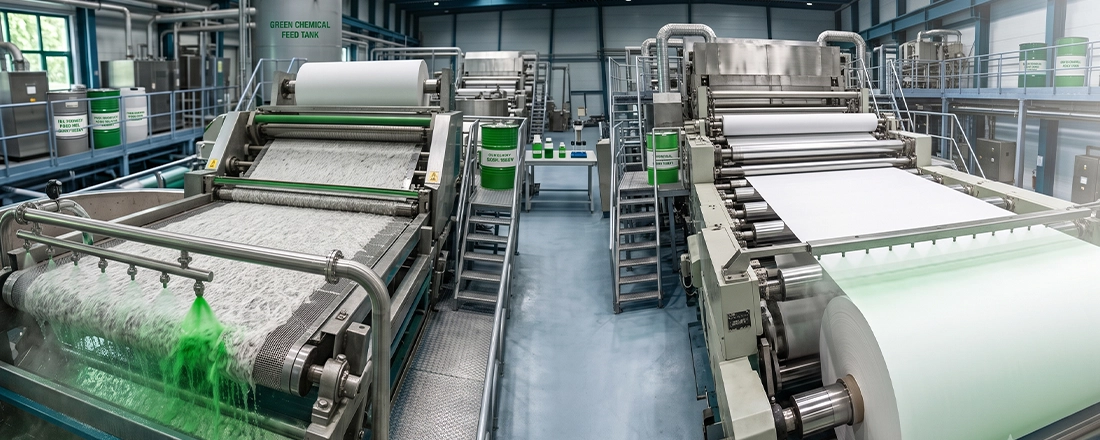
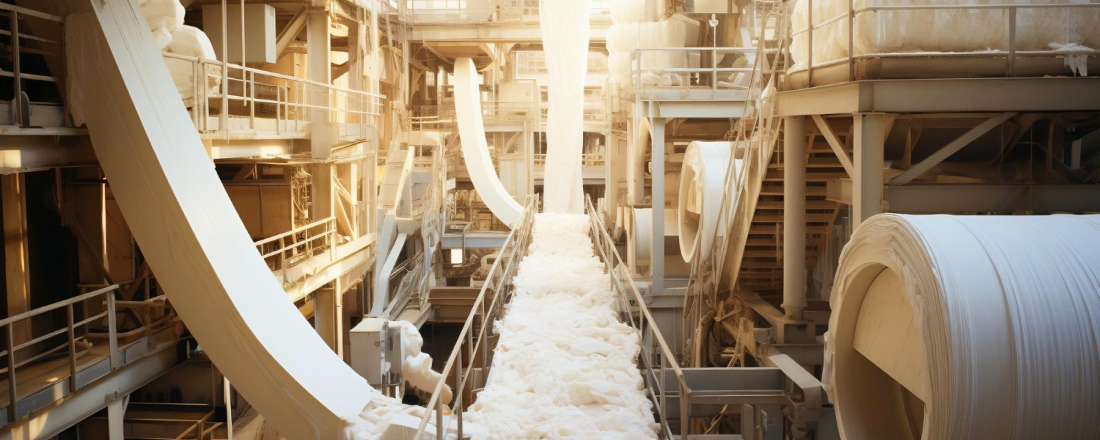
The pulp is mixed with a large amount of water to create a thin slurry. This mixture is spread across a fast-moving mesh screen where water drains away, leaving behind a thin layer of interlocked cellulose fibres — a critical moment in cellulose fibre paper production.
This wet sheet then moves through:
• Pressing sections → to squeeze out water
• Heated drying cylinders → to remove remaining moisture
• Finishing sections → to improve smoothness and surface quality
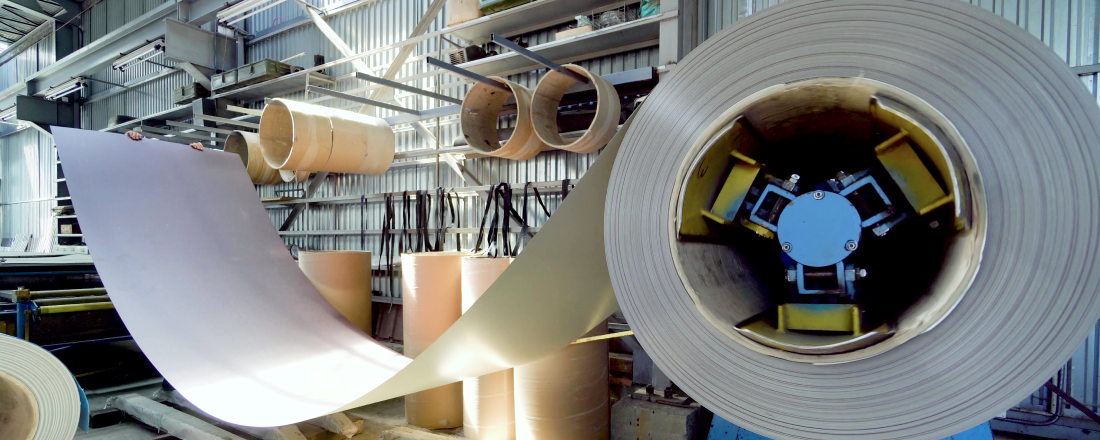
Modern paper machines can run at extremely high speeds, producing continuous rolls of paper several metres wide.
What started as wood chips has now become usable paper.
Step 5: Finishing the Paper
Depending on the final application, the paper may undergo additional treatments such as:
• Coating
• Surface sizing
• Calendering
• Strength enhancement
Different products require different performance properties.
For example:
• Packaging paper needs durability.
• Printing paper needs smoothness.
• Tissue paper needs softness.
• Food packaging may require barrier properties.
This is where paper manufacturing chemistry becomes especially critical — transforming papermaking from a mechanical process into a highly engineered one.
More Than Just Wood and Water
At first glance, paper seems simple. But behind every sheet is a carefully balanced wood pulp papermaking process involving raw material preparation, water management, machine speed, chemistry, and process control.
As the industry evolves toward sustainable paper manufacturing, recycled pulp systems, and smarter production, the entire process continues to become more advanced and efficient.
At Ivax, this evolving landscape underscores the importance of chemical solutions that support consistency, efficiency, and performance across modern sustainable paper manufacturing operations.
Because paper is no longer just made from wood. It is engineered through process, precision, and performance.
Frequently Asked Questions (FAQ)
What is the wood pulp papermaking process?
The wood pulp papermaking process refers to the sequence of steps used to transform raw wood into usable paper. It begins with debarking and chipping logs, then moves through pulping (mechanical or chemical), cleaning and refining, sheet formation on a mesh screen, pressing and drying, and finally surface finishing treatments such as coating or calendering.
What is cellulose fibre and why does it matter in paper production?
Cellulose fibre is the primary structural component of wood and the key raw material in cellulose fibre paper production. During pulping, lignin (the natural binding agent in wood) is removed to free individual cellulose fibres. These fibres then form the interlocked network that gives paper its strength, smoothness, and printability.
What is the difference between mechanical and chemical pulping?
Mechanical pulping physically grinds wood chips into pulp, retaining most of the lignin. It is cost-efficient and commonly used for newsprint and packaging boards but produces weaker, shorter-lived paper. Chemical pulping uses heat, pressure, and chemical reactions to dissolve lignin while preserving fibre integrity, resulting in stronger and brighter paper grades used for writing and printing.
How does paper manufacturing chemistry affect paper quality?
Paper manufacturing chemistry plays a role at multiple stages of production. During chemical pulping, it determines fibre strength and brightness. During sheet formation and finishing, additives such as retention aids, sizing agents, and strength chemicals help mills achieve the required drainage behaviour, surface quality, and mechanical properties. Without the right chemistry, even high-quality raw materials can produce inconsistent results.
What role does sustainable paper manufacturing play today?
Sustainable paper manufacturing is becoming increasingly central to the industry as mills face pressure to reduce environmental impact while maintaining performance. This includes shifting to recycled pulp systems, adopting non-wood fibre alternatives, improving water and energy efficiency, and using process chemistry solutions that help mills adapt to variable raw material inputs without sacrificing product quality.
How does Ivax support the papermaking process?
Ivax provides specialised chemical solutions designed to support every stage of the wood pulp papermaking process — from pulp preparation through to sheet formation and finishing. By optimising paper manufacturing chemistry across diverse fibre sources and machine conditions, Ivax helps mills improve consistency, efficiency, and output quality.