Introduction: Why Paper Needs Protection from Water
Paper may look simple, but the way it behaves in contact with liquids determines its performance. From printing to packaging, paper must resist quick liquid absorption to avoid blurred prints, poor structure, and reduced durability.
This is where paper sizing chemicals play a vital role. During papermaking, the chemical agents in paper sizing affect the paper’s performance in contact with liquids. They help to retain ink on the surface and keep moisture out, turning regular paper into water-resistant paper that remains strong and durable — essential for high-quality printing, writing, and industrial packaging applications.
What Is Paper Sizing?
Paper sizing is the process of reducing the natural tendency of paper fibres to absorb water. Cellulose fibres, which form the basic structure of paper, are naturally hydrophilic. This means they easily attract and absorb water. The paper sizing process is a fundamental step in producing paper that meets performance standards across diverse industries.
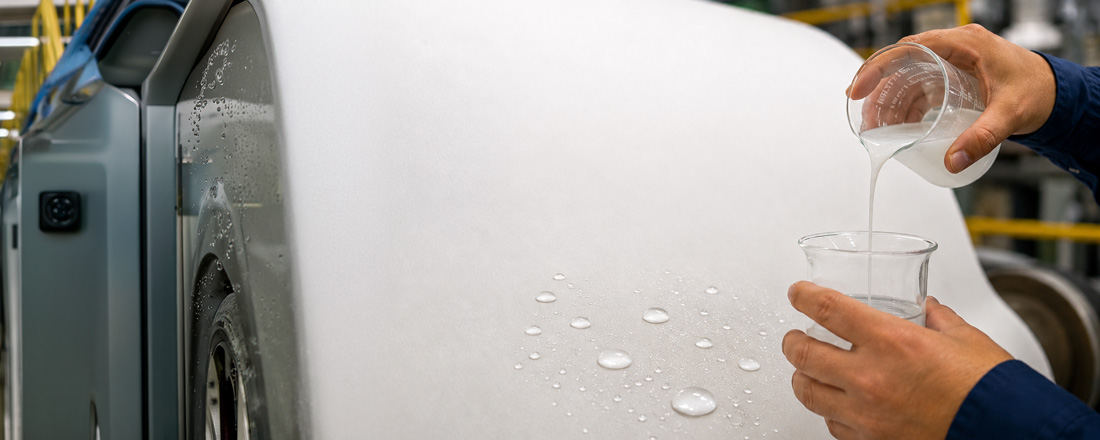
The goal is not to make paper completely waterproof. Instead, sizing helps slow liquid absorption, so paper remains strong, and ink stays near the surface.
This controlled interaction with water is what enables paper to become water-resistant, allowing it to maintain its quality in printing, writing, and packaging applications.
Types of Paper Sizing Chemicals
In papermaking, sizing can be applied in two main stages of production. Choosing the right sizing agents in papermaking depends on the paper grade, production system, and end-use requirements.
Internal Sizing
Internal sizing happens early in the papermaking process. At this stage, paper sizing chemicals are added directly to the pulp mixture before the sheet is formed.
Some of the most widely used internal sizing agents are:
• Alkyl Ketene Dimer (AKD)
• Alkenyl Succinic Anhydride (ASA)
• Rosin Sizing (Cationic/Anionic/Neutral)
These chemicals interact with cellulose fibres, creating hydrophobic surfaces that resist liquid penetration.
Internal sizing is widely used in modern papermaking because it works well with today’s neutral and alkaline production systems.
Surface Sizing
Surface sizing occurs after the sheet of paper has formed.
In this step, a thin layer of sizing solution, often containing starch and other additives, is applied to the paper surface using a size press.
This enhances the paper’s surface strength and improves printability. The chemicals form a thin protective layer that reduces liquid penetration while creating a smoother surface for printing.
This step is particularly important for printing and writing papers where ink control and surface uniformity are critical.
How Sizing Chemicals Create Water-Resistant Paper
The effectiveness of paper-sizing chemicals stems from their ability to modify the surface chemistry of fibres.
Many sizing molecules have both hydrophilic and hydrophobic components. The hydrophilic end attaches to cellulose fibres, while the hydrophobic portion faces outward. This orientation creates a protective barrier that reduces water’s ability to spread across the fibre network.
This controlled resistance is what turns ordinary paper into water-resistant paper.
Why Sizing Is Important for Paper Quality
Sizing chemistry affects several key aspects of paper performance.
Better Print Quality
Properly sized paper keeps ink close to the surface. This produces sharper images, cleaner text, and better overall print clarity.
Improved Moisture Resistance
Sized paper resists moisture penetration, which helps it stay strong and stable in humid conditions.
Stronger Paper Structure
When paper absorbs too much moisture, fibre bonds weaken. Sizing helps protect those bonds, improving durability.
Consistent Production
Sizing chemicals help papermakers maintain reliable quality even when working with recycled fibres or running machines at high speeds. Consistent use of the right paper sizing chemicals is what separates average-grade paper from high-performance grades used in demanding applications.
Conclusion
Paper quality depends on more than fibres alone. It also depends on how those fibres interact with water, ink, and moisture.
By using paper-sizing chemicals, papermakers can control liquid absorption, improve printability, and produce durable, water-resistant paper suited for today’s demanding applications.
As papermaking technology continues to evolve, sizing chemistry remains a key tool, quietly ensuring that paper performs reliably, from everyday printing to advanced packaging solutions.
Frequently Asked Questions (FAQs)
1: What are paper sizing chemicals?
Paper sizing chemicals are chemical agents added to paper during manufacturing to reduce its natural tendency to absorb water. They modify the surface of cellulose fibres to create a hydrophobic barrier, helping paper resist liquid penetration while maintaining its strength and print quality.
2: What is the difference between internal sizing and surface sizing?
Internal sizing involves adding paper sizing chemicals directly into the pulp mixture before the sheet is formed, so the entire fibre structure is treated. Surface sizing, on the other hand, applies a thin sizing solution to the outside of an already-formed sheet using a size press. Both approaches work together to optimise water resistance and printability.
3: What are the most commonly used internal sizing agents in papermaking?
The most widely used sizing agents in papermaking include Alkyl Ketene Dimer (AKD), Alkenyl Succinic Anhydride (ASA), and Rosin Sizing (available in cationic, anionic, and neutral variants). AKD and ASA are preferred in modern neutral and alkaline papermaking systems, while rosin sizing is used in acidic systems.
4: Does paper sizing make paper completely waterproof?
No. The goal of the paper sizing process is not to make paper fully waterproof but to slow down liquid absorption in a controlled way. This controlled resistance keeps the paper strong and stable, ensures ink stays near the surface for better print quality, and prevents fibre bonds from weakening due to excess moisture.
5: Why is sizing important for print and packaging paper?
Sizing is critical in print and packaging applications because it directly impacts how ink adheres to the paper surface. Properly sized paper produces sharper images and cleaner text, resists moisture-related warping, and maintains structural integrity during handling and storage. For packaging, water-resistant paper is especially important for protecting contents in humid or variable environments.
6: How do sizing chemicals interact with cellulose fibres?
Sizing molecules typically have a dual structure — one end (hydrophilic) bonds to the cellulose fibre, while the other end (hydrophobic) faces outward. This orientation forms a water-repelling barrier across the fibre network, significantly reducing how quickly water can spread through the paper. This is what transforms ordinary paper into effective water-resistant paper suitable for modern industrial and commercial use.