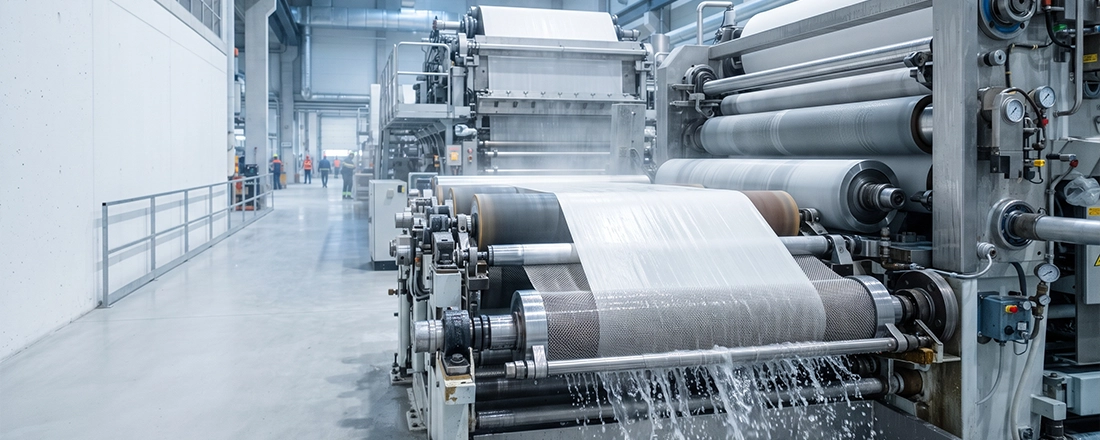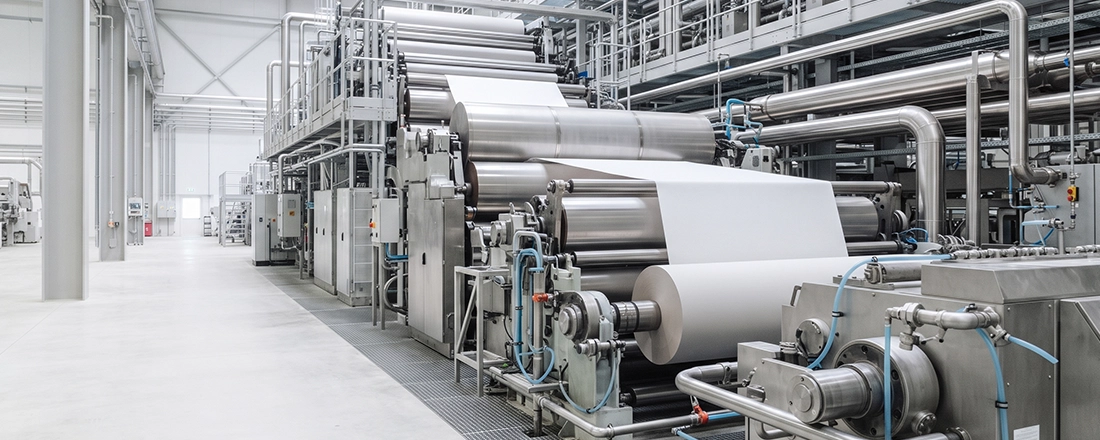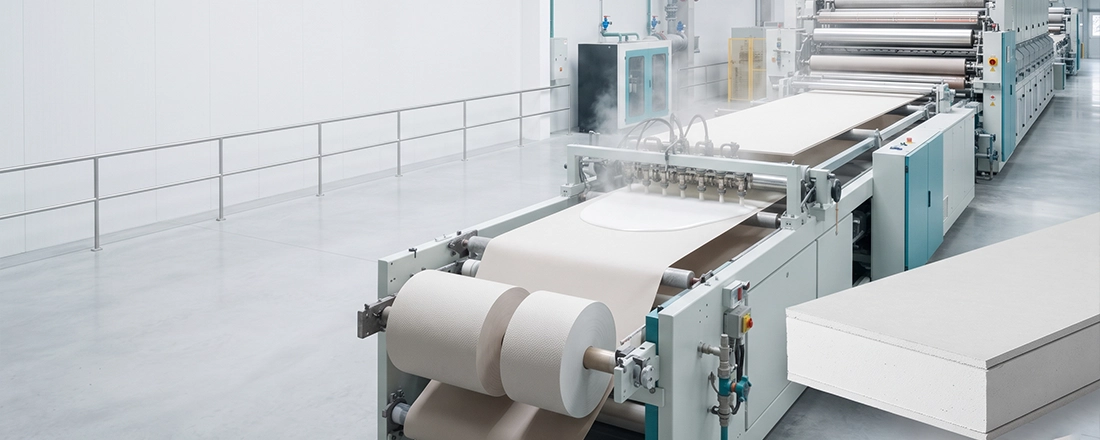
A gypsum board may look like a simple construction panel, but its performance depends on a carefully balanced combination of materials. While the gypsum core provides the main structure, the paper facing plays an equally important role in maintaining strength, surface quality, and durability.
But there is a challenge. During manufacturing, the paper must interact with wet gypsum slurry without absorbing excessive moisture. Too much absorption can affect the paper’s behaviour during production, while insufficient absorption at the bonding surface can interfere with proper adhesion.
This is where gypsum board sizing chemicals make a difference. By controlling water absorption, sizing treatments help manufacturers balance paper performance and core bonding.
The Role of Paper in Gypsum Board Manufacturing
Manufacturers typically make gypsum boards by placing wet gypsum slurry between two continuous sheets of facing paper. As the gypsum sets and the board dries, the paper becomes bonded to the core, creating a composite panel.
The paper facer for gypsum board performs several important functions:
Structural Performance: Contributes to the board’s overall mechanical properties.
Surface Finish: Provides a suitable surface for finishing and decoration.
Moisture Management: Influences how the board surface responds to water.
Because these functions are interconnected, manufacturers must carefully control the paper’s properties during production.
Why Sizing Matters in Gypsum Board Production
Paper fibres naturally absorb water. Sizing treatments modify this behaviour, helping manufacturers regulate how much water penetrates the paper.
However, gypsum board manufacturing presents a particular challenge.
The paper surface facing the gypsum core must bond effectively with the wet slurry. At the same time, the exposed surface must meet the finished board’s requirements.
If the paper’s absorption characteristics are unsuitable, the bond between the paper and gypsum may be affected. Manufacturers must therefore balance water absorption, paper-to-core bonding, and the finished board’s moisture-resistance requirements.
Therefore, effective sizing is not about making paper completely water-repellent. It is about achieving controlled water absorption without compromising the paper’s intended function.
Types of Sizing Solutions Used in Papermaking
When selecting gypsum liner paper chemicals, manufacturers can consider two established sizing approaches.
- Internal Sizing
Internal sizing agents are introduced into the pulp suspension during papermaking. They modify the water-absorption characteristics of the resulting sheet.
Common papermaking chemistries include rosin-based sizing agents, alkyl ketene dimer (AKD), and alkenyl succinic anhydride (ASA).
The appropriate selection depends on the paper furnish, manufacturing conditions, and desired performance.
- Surface Sizing
Surface sizing involves applying chemical treatments to the partially dried paper web, typically using a size press, to control liquid penetration and improve surface properties.
In gypsum board liner manufacturing, treatments may include starch-based formulations, rosin derivatives, acrylic polymers, or silicone emulsions, depending on the application.
The exposed face may be treated to support coating and printability, while the gypsum-contact side requires controlled absorption to maintain effective bonding with the gypsum core.
Internal sizing, surface sizing, or a combination may be selected based on liner grade and production requirements.
What Manufacturers Should Consider When Choosing Sizing Chemicals
Selecting the right gypsum board manufacturing chemicals requires evaluating their performance under actual manufacturing conditions.
Key considerations include:
Water Absorption: The paper should achieve the absorption characteristics required for its intended application.
Paper-to-Core Bonding: Treatments must support the required adhesion between the facing paper and the gypsum core.
Production Consistency: Monitor sizing performance to maintain consistent water-absorption characteristics across production.
End-Use Performance: The finished board must meet relevant strength, surface, and moisture-resistance requirements.
Conclusion
Reliable gypsum board manufacturing begins with selecting paper that performs effectively throughout production and in its final application.
The right sizing solution helps regulate water absorption while supporting the surface characteristics and bonding requirements of the finished board.
Ivax offers a specialised sizing portfolio for gypsum board applications, backed by technical expertise in papermaking chemistry. Through plant surveys, testing, trials, and application support, Ivax works with manufacturers to identify solutions suited to their production requirements.