Paper may be made on machines, but its performance is engineered in chemistry. And today, that chemistry matters more than ever. From sheet formation and strength to machine stability, energy use, and compliance standards, the chemical used in the paper industry influences all these aspects. Mills face evolving grade requirements, increasing recycled fibre content, and tighter environmental regulations, and so, the chemistry employed during the process can become a defining factor in overall competitiveness.
The Invisible Factor Behind Good Paper
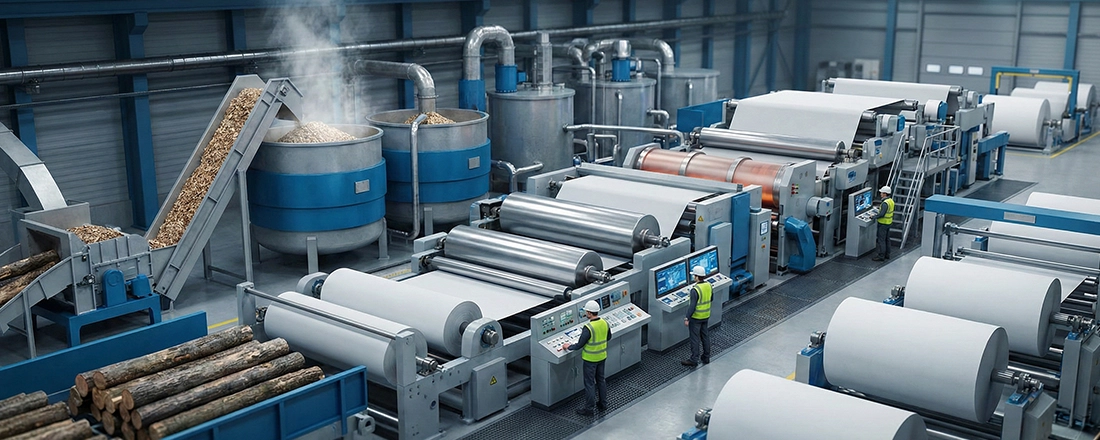
Walk into any mill, and you’ll see giant machines, roaring stock preparation units, and reels of paper forming at speed. But one of the most potent contributors to paper performance is the chemistry. A slight adjustment in sizing, retention, or coating chemistry can turn a weak, uneven sheet into a high-performance one. This makes chemical selection a core part of modern papermaking strategy.
1. Identify Your Functional Requirements Clearly
Every paper grade has specific chemical needs. Before evaluating suppliers, mills must outline the exact functionality required. The standard categories include wet-end additives, sizing agents, strength resins, retention and drainage aids, optical brighteners, coating binders, and biocides.
Fibre composition, filler levels, target sheet properties, as well as machine configuration, are the parameters on which the ideal chemical package depends. For example, printing and writing grades typically rely on efficient internal sizing and strong brightness retention. Packaging and board grades place higher emphasis on strength enhancement, drainage improvement, and filler optimisation. Mills working heavily with recycled fibre often require robust biocides, dispersants, and deposit-control solutions to handle contaminants and maintain system cleanliness.
By precisely stipulating their requirements well in advance, mills create a solid base for selecting chemicals that actually help them achieve their production objectives.
2. Check Chemical Compatibility with Your Process
Even the best additive fails if it clashes with your machine conditions. Compatibility is one of the most important yet overlooked factors.
Considerations such as:
- pH range and temperature: AKD and ASA, for example, perform differently based on pH and mixing conditions.
- Furnish and filler interaction: Mills using PCC, GCC, or kaolin fillers must ensure the chemical supports stable retention without affecting formation.
- Closed-loop water systems: As mills reduce freshwater use, chemicals used in papermaking must remain stable in high-dissolved-solids environments to avoid deposits or foaming.
- Machine speed and drainage behaviour: A retention aid should not slow drainage or increase breaks.
Compatibility determines whether a mill achieves consistent, reproducible performance or faces chronic runnability issues.
3. Evaluate Performance Through Real Data
Performance is more than a supplier brochure. It requires measurable proof. Lower-dosage, high-efficiency additives often provide better long-term value than cheaper, high-loading options. Hence, while selecting a chemical for the paper industry, mills should review laboratory data, mill trial reports, and peer-reviewed research.
Performance metrics to evaluate include:
- Dosage required to achieve the desired effect
- Stability under furnish variations
- Impact on sheet formation, strength, brightness, and printability
- Influence on drainage and retention efficiencies
- Effect on machine cleanliness and stability
4. Consider Environmental, Health, and Safety Impacts
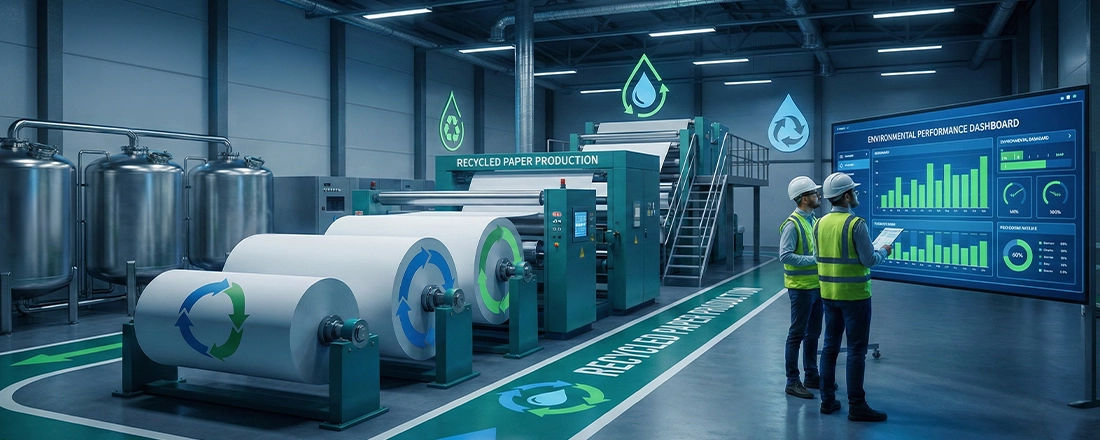
Sustainability now plays a significant role in selecting chemicals for the paper industry. Most mills are focusing on chemicals that reduce effluent load, reduce COD/BOD contributions, and minimise worker exposure risks.
The environmental considerations include:
- Biocides and surfactants: Some chemicals can increase organic load in effluents and demand advanced treatment.
- Bleaching chemicals: Modern mills use chlorine-free processes due to pressure from regulations and environmental studies.
- Coating additives: The nano-pigments and bio-based binders in coatings reduce environmental impact and simultaneously improve the performance of coatings.
- Worker safety: Chemicals for the papermaking industry have corrosive or toxic properties, which require more strict measures of handling and disposal.
5. Calculate Total Cost
Choosing chemicals based purely on price is a common mistake. This should really be about the cost of ownership, which includes:
- Required dosage
- Improvements in runnability and reduction of downtime
- Impact on yield and raw material optimisation
- Cleaning, maintenance, and deposit-control costs
- Storage and handling requirements
- Supplier reliability and technical support
6. Supplier who can provide expertise, not just materials
A strong partnership with suppliers is essential. Look for vendors who offer:
- Technical audits of your process
- On-site support during trials
- Troubleshooting assistance
- Consistent supply stability
- R&D-backed guidance on upcoming regulations and innovations
Conclusion
The proper selection of a chemical used in the paper industry will ensure consistent quality, efficient operations, and long-term cost performance. When mills emphasise functionality, compatibility, sustainability, and expert support, the chemical used in papermaking becomes a strategic advantage, not just a routine input.
Looking to optimise your chemical program? Connect with Ivax for tailored high-performance solutions designed for your production needs.